January 08, 2026
•
By Admin
How to Avoid Scams When Recovering Your Lost Items
The Scam: Someone claims to be a police officer or a security guard at a popular mall. They say your item was handed in, but you need to pay a "processing fee" or "storage fee" via Mobile Money to have it released. The Reality: Official police procedures do not involve sending money to private mobile numbers for lost property. The Rule: If someone claims your item is at a police station (e.g., Central Police Station Kampala), tell them
Losing a valuable item like a phone, a National ID, or a laptop is stressful enough. Unfortunately, scammers often try to take advantage of that stress. They browse "Lost and Found" posts and call owners, pretending to have found the item just to trick them out of money.
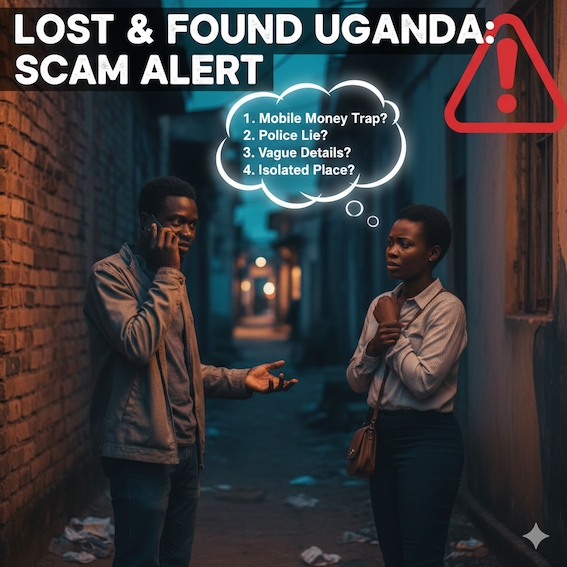
To keep our community safe, here are four red flags you should watch out for and the golden rules for a safe recovery.
1. The "Mobile Money Transport" Trap
The Scam: The person calls and says, "I have your bag, but I’m currently in Jinja. Send me 20,000 UGX via MTN/Airtel Money for the bus, and I’ll bring it to you." The Reality: Once you send that money, the phone number is switched off, and you never hear from them again. The Rule: Never send transport money or a "reward" before seeing your item in person. A genuine Good Samaritan will understand that you’ll cover their costs when you meet.
2. The "Police Storage" Lie
The Scam: Someone claims to be a police officer or a security guard at a popular mall. They say your item was handed in, but you need to pay a "processing fee" or "storage fee" via Mobile Money to have it released. The Reality: Official police procedures do not involve sending money to private mobile numbers for lost property. The Rule: If someone claims your item is at a police station (e.g., Central Police Station Kampala), tell them you will come to the station in person to verify and pick it up.
3. The Lack of Specific Details
The Scam: Scammers often give vague descriptions. If you lost a "black wallet," they will call saying, "I found your black wallet." The Rule: Test them. Ask a specific question only the finder would know.
"Can you tell me the name on one of the business cards inside?" * "What is the brand of the power bank that was in the bag?" * If they hesitate or get angry, they likely don't have your item.
4. Meeting in Isolated Places
The Scam: The person insists on meeting late at night or in a secluded "short-cut" alleyway to hand over the item. The Rule: Always meet in a highly public, well-lit place. Good spots include:
Inside a well-known supermarket (e.g., Capital Shoppers or Carrefour).
In the lobby of a bank.
At a nearby Police Post.
Our Golden Advice
If a deal feels rushed or you feel pressured to send money "right now," it is likely a scam. Genuine finders are usually patient.
Found something? Report it on our platform for free! Lost something? Be cautious, stay patient, and follow the safety steps above.
Related Articles
How to replace a lost driving permit in 2026
2. Valid National ID: For Ugandans (or a NIRA verification letter). Foreigners n...
Read →The 60-Second Guide to Using LostAndFound.ug
Location Matters: Pinpoint where you last saw it (e.g., "Entebbe Airport Termina...
Read →